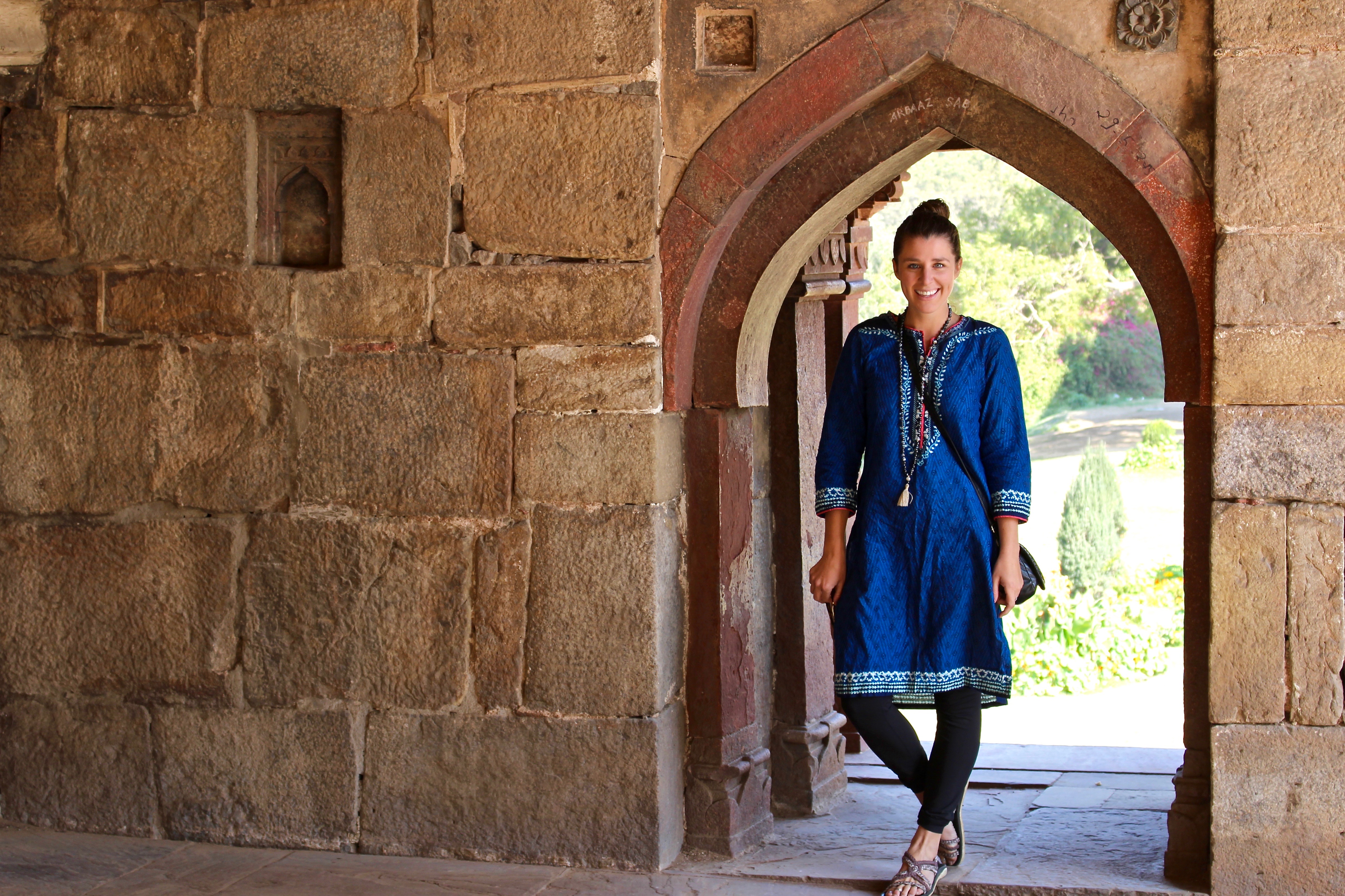
Reflecting on my time here in India and the numerous, heartbreaking events that have taken place in my home country and abroad recently, I feel a deep responsibility to share some thoughts, at least briefly, on privilege.
Privilege is something that I’ve been grappling with most of my life. Since I was very young, I recognized that where I was born gave me certain privileges that others did not have – food security, education, human rights, a home. This recognition has driven both my academic and life goals toward where I am today, trying to understand the ways in which we can make the human experience more vibrant and equal across the world. In more recent years, though, I’ve tried more and more to grapple with a different kind of privilege. It’s the kind of privilege that how I was born gave me.
In the grappling, I’ve tried through conversations with friends, reading, listening, and deconstructionist tactics to figure out my thoughts on, role in perpetuating, and role in changing the state of privilege in the world. My following conclusions are only a product of the grappling I’ve done so far. While I’m more than prepared to do more and think it necessary to do so, I’ve been mostly silent on this issue of privilege (even through the slews of media coverage and the call in my heart to write something) and I think it’s past due that I share these humble thoughts and conclusions.
First and foremost, I think it’s important that we create a distinct differentiation of the noun ‘privilege’ from the adjective ‘privileged.’
A privilege is generally something we envision as a gift or responsibility. It’s something we’re given or entrusted with through some sort of merit (and sometimes just pure luck, too). People in the military often say, “It’s a privilege to serve.” I would posit this is not only because of pride in one’s country, but also because they recognize that their position was won through the hard work of basic training and beyond. These privileges come in many shapes and sizes, from things like borrowing your parents’ car to continuing to love your partner. In this way, we’re entrusted with physical, metaphoric, and emotional valuables or tasked with roles of honor because of the ways in which we’ve proven ourselves.
All of my time here in India has overwhelmingly felt like a privilege. I’ve tried my hardest (and will keep trying) during my time here to live up to the call of these privileges. It has absolutely been a beautiful journey to get to represent Americans abroad, to uphold those around me in kindness and love, and to engage in research that could contribute to positive change for so many in the world. All three of these privileges have been roles of honor for me. As I continue to meet people and as they share pieces of themselves with me in their stories and experiences, I feel more and more that I’ve been entrusted with something beautiful and valuable in my community and my research.
The word ‘privileged,’ though, infers a state of being – to be privileged – that is not necessarily earned through the same sort of merit or chance that privileges invoke.
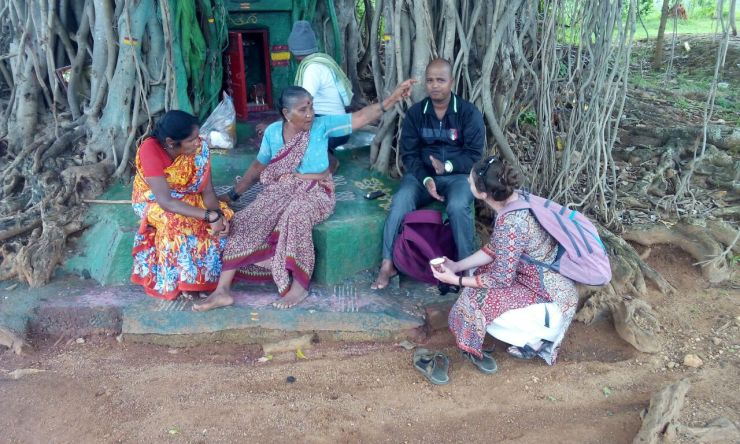
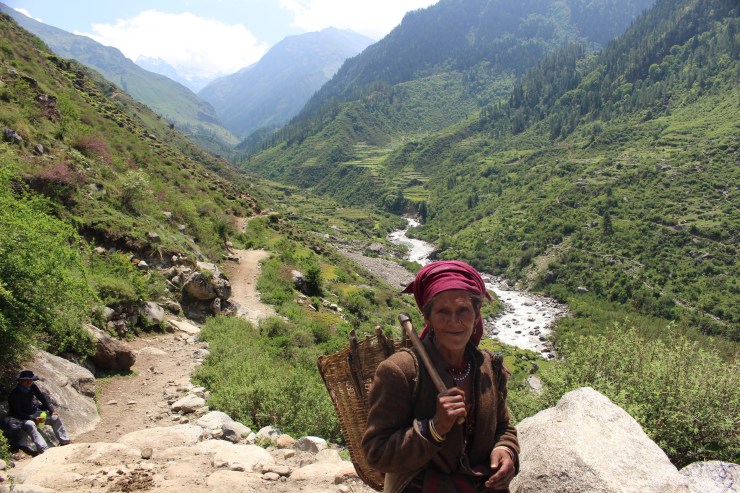
In contrast to the ways my privileges have created beauty in my experiences in India, I’ve been forced to confront how privileged I am here time and time again. People insist I take their seats when the bus is full. People listen intently to what I have to say when they would normally be talking over one another to make sure their own voice is heard. Cars stop when I cross the street. Tables at restaurants come quicker. People want to be my friends. Strangers stop me to ask if we can take a selfie together. All of this through no merit of my own, but because of how I was born.
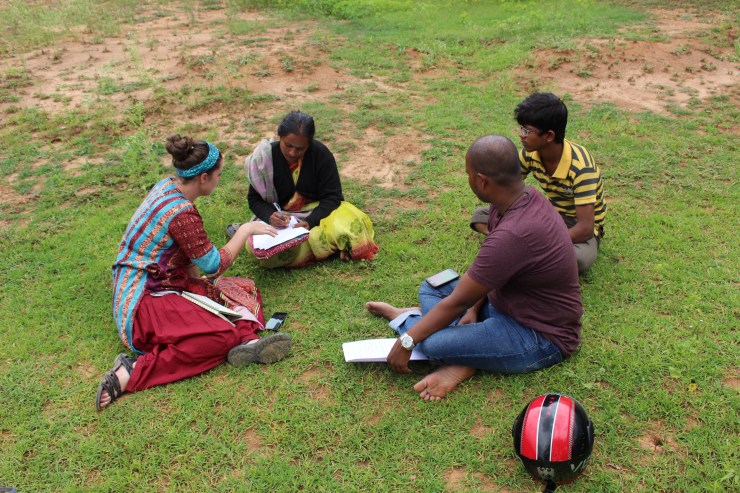
While these run in’s with being privileged have not necessarily been beautiful, both the privileges I have and how privileged I am in India have challenged me for the better. For the sake of my privileges, I have pushed myself to be more kind, more educated, more connected and to delve as deeply as possible into my research. For the sake of my privilege, I’ve tried to challenge the ways my ‘foreign-ness’ and whiteness elevate me: I sit on the floor in the homes of people I interview whenever it’s acceptable. I insist that it’s okay for me to stand on the bus. I try to humbly listen to the knowledge and important experiences of the people around me. I have conversations with people who consider themselves below the worthiness of my attention.
These kinds of uncomfortable confrontations with being privileged are some of the things I’ve been most thankful for during my time here in India. Back home in our predominantly white, American society, I don’t have many reminders of my own state of privilege. This is because my privilege is normalized. The way racism and privilege are ingrained into the American consciousness is not something to be argued. They are facts of our society that leave many people systematically elevated while others are systematically oppressed.
Being privileged in America does look drastically different though than it does in India because it isn’t as overt. I don’t get tables faster at restaurants, but I do get more lenience from our criminal justice system, I’m presumed innocent and not dangerous from my appearance, and I don’t have to worry that one of my family members or I will be profiled, criminalized, or murdered just by the virtue of the color of our skin.
In the past week, my Facebook feed has been full of outraged cries against the state of racism in America. These cries have not been uniquely American though. These cries have come from all corners of the world – from Canada, Turkey, India, Gambia, Ghana, South Africa, Mexico, Brazil, the UK, Korea, Australia, and China.
From where you were born to how you were born, as a global community we recognize that these issues of privilege present in America tie in deeply with the state of the human race at large. Wars divide us because of religion and politics. Media outlets cover terrorist attacks in the western world with gusto and outrage while terrorist attacks in the Middle East and Africa are barely a blip on their radar. Refugees by the millions are demonized as parasites. Black men are being brutalized, killed, and incarcerated at rates far beyond the statistical average. Race, religion, caste, and more divide us into classes of better and worse, human and less than human.
And voices from all corners of the world are crying together, “We’ve had enough.”
Moving forward, we have to be willing to closely examine and challenges our biases, the ways we are privileged, and the ways others are not. In America, this grappling needs to be done to look at issues of how whiteness is valued while other ethnicities are marginalized, disenfranchised, and taught their humanity means less. Abroad, this grappling needs to be done on this same issue, among numerous other issues that keep us from realizing equality of the human experience in all its iterations.
Most importantly, though, we have to go beyond the grappling. It’s not good enough to know you or others are systematically privileged. It’s not good enough to just be uncomfortable. We have to do more.
We are the people responsible for shaping our future – for challenging systematic racism at home and oppressive regimes abroad alike. As allies in the fight to make the world a better and more equal place for all humans, there’s a few important things we can do:
- Don’t be complacent. Complacency is stagnation and it is the status quo in a world of injustice. Decide today that the status quo is not good enough and not what you stand for and dedicate yourself to a cause you deem worthy.
- LISTEN. (That’s it. Period. End of sentence. Full stop). We can’t just listen to reply. Listen to comprehend & understand and listen to dwell in the words & experiences of the oppressed. They are powerful and full of a deeper truth from the hundreds of years of history and experiences that go beyond what just words can communicate.
- Make other people aware of their state of privilege (talk about it, post about it, go to events, volunteer, vote, get politically active). There are still people who think racism is dead in America. There are still people who think if impoverished people in developing countries worked harder, they could have what we have. We all need to try to bring these people to a common ground of understanding on these issues wherever and whenever possible. Your voice has the power to do that.
- Demand change. Time and time again in history, we have seen the power of people who challenge the status quo. From Gandhi to Nelson Mandela to Martin Luther King, Jr., civil disobedience and peaceful protest have been the vessels through which these great leaders chose to act and we remember them for a reason: their tactics worked. They created real change in the world as representatives of their own respective movements and members of others.
In my generation, I often hear people say their life goals include the ever-elusive ‘changing the world.’ While it is very unlikely that any of us will become the next Gandhi or Malala Yousafzai, we all have the chance to become a part of the movements that seek to improve our world for the better. Nelson Mandela didn’t end apartheid on his own: he led a movement (a large part of the time from a prison cell, by the way, so no excuses) and represented peacefully the will of the people to challenge systematic oppression in South Africa. Movements may look different depending on where you were born or the issues that are most important to your conscience, but it is undeniable that when we walk together, we are stronger than when we walk alone. When we lift up our voices under one movement, we can create real change. And when we uplift the worth of all persons, we recognize the essential truth of our identity as one human race, full of sameness and diversity in one.
In the end, is it possible to achieve a future that recognizes the worth of all persons in this crazy, divided, chaotic world of ours?
Honestly, I don’t know for sure. I am sure though there are some people that would like us to believe it impossible – to discourage us from action, to discourage change.
Will I listen to those people?
Hell no.
Am I going to do everything I can to make that future a possible reality?
Hell yes. Hope to see you by my side.
Namaste.
-Dani
 dani lindamood
You are right Dani, the real change comes from within 👌another great article Dani😍 Keep writing 👍
LikeLike
Thanks Hiral! I’m so glad you’ve enjoyed reading. I promise to keep writing 🙂
LikeLike
Amazing and totally honest account of someone as privileged as you, not because you were born privileged but because you have the heart to get that privilege reserved for good people of this world. With these thoughts and clarity you will go a long way in life and world would be a better place with people like you around Dani! Honest!
LikeLike
Thank you Papa Raman! I definitely strive to let honest reflection guide my life and encourage others to as well. I humbly hope it will bring our world toward a better future, as you’ve said.
LikeLike